


Blog
Natural Sun-Dried vs. Machine-Dried Figs

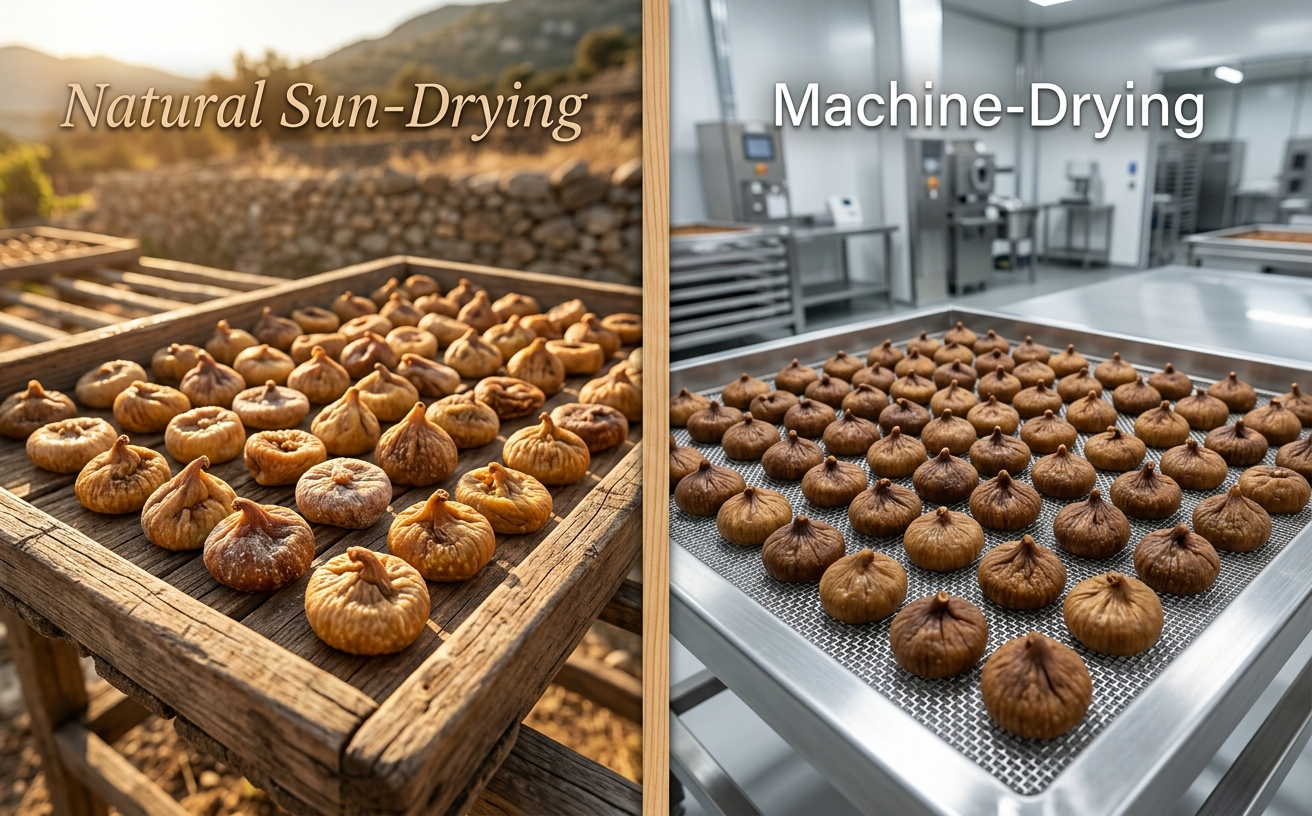
Dried figs have been enjoyed for centuries, but not all dried figs are produced in the same way. The drying method plays a significant role in determining the fruit’s flavor, texture, appearance, nutritional value, and overall market appeal.
Today, two primary methods are used to produce dried figs: natural sun drying and machine drying. Each approach has its own advantages and is suitable for different markets and applications.
For importers, wholesalers, and food manufacturers, understanding these differences helps ensure the right product is selected for the intended market.
Why the Drying Method Matters
Fresh figs contain a high percentage of water, making them highly perishable. Drying removes most of this moisture, extending shelf life while preserving the fruit’s natural sweetness and nutritional value.
The drying process also influences:
- Flavor
- Texture
- Color
- Moisture content
- Shelf life
- Commercial value
As a result, buyers often consider the drying method when choosing suppliers.
What Are Natural Sun-Dried Figs?
Natural sun drying is the traditional method of preserving figs. After harvesting, ripe figs are placed under direct sunlight and allowed to dry naturally over several days.
This process has been practiced for generations in regions with warm, dry climates, where sunlight provides ideal drying conditions without the need for artificial heat.
Many premium Iranian dried figs are produced using this natural method.
Advantages of Natural Sun Drying
Richer Flavor
Slow drying under natural sunlight allows sugars to develop gradually, creating a deeper and more complex sweetness.
Better Texture
Sun-dried figs generally remain soft, tender, and pleasantly chewy while maintaining their natural structure.
Natural Sugar Bloom
One of the most recognizable features of premium sun-dried figs is the white crystalline coating that sometimes appears on the surface.
This is not mold or added sugar. It is naturally occurring fruit sugar that rises to the surface during drying and is often considered a sign of high-quality figs.
Traditional Production
Many consumers appreciate products produced using traditional agricultural methods with minimal processing.
For premium retail markets, this traditional production story often adds significant value.
What Are Machine-Dried Figs?
Machine drying uses controlled industrial equipment to remove moisture from fresh figs.
Temperature, humidity, and airflow are carefully regulated throughout the drying process, allowing producers to achieve consistent results regardless of weather conditions.
This method is widely used for large-scale commercial production.
Advantages of Machine Drying
Consistent Production
Machine drying offers excellent control over moisture content, resulting in highly uniform products.
Faster Processing
Industrial drying significantly reduces production time compared to traditional sun drying.
Weather Independence
Unlike natural drying, machine drying is not affected by rain, humidity, or seasonal climate changes.
High Production Capacity
Industrial facilities can process large quantities efficiently, making machine drying suitable for high-volume manufacturing.
Flavor Comparison
One of the biggest differences between the two methods is flavor.
Natural sun-dried figs often develop a richer, fuller taste because the drying process occurs gradually.
Machine-dried figs usually have a cleaner and more uniform flavor, although some buyers feel they lack the complexity found in naturally dried fruit.
The preferred option depends on customer expectations and market preferences.
Nutritional Value
Both drying methods preserve many of the fruit’s valuable nutrients, including dietary fiber, minerals, and natural sugars.
When performed correctly, both methods produce healthy products suitable for international markets.
However, natural sun drying is often associated with minimal processing, making it especially attractive to consumers seeking more natural foods.
Appearance
Appearance is another factor buyers carefully evaluate.
Natural sun-dried figs often display slight variations in size, shape, and color, reflecting their traditional production.
Machine-dried figs typically appear more uniform because drying conditions are tightly controlled.
Neither appearance is inherently better; different markets simply have different preferences.
Shelf Life
Properly dried figs can remain fresh for many months when stored under appropriate conditions.
Machine drying provides extremely consistent moisture levels, while experienced producers of natural sun-dried figs also achieve excellent shelf stability through careful drying and quality control.
Packaging and storage conditions are equally important in maintaining freshness during international transportation.
Which Method Is Better for Export?
The answer depends on the target market.
For premium retail brands, gourmet food stores, and specialty markets, natural sun-dried figs are often preferred because of their authentic flavor, traditional production, and premium image.
For industrial food manufacturers requiring large quantities with highly consistent specifications, machine-dried figs may offer practical advantages.
Many experienced importers choose suppliers capable of offering both options according to customer requirements.
Why Iranian Sun-Dried Figs Are Highly Regarded
Iran has ideal natural conditions for producing premium sun-dried figs.
Long sunny days, low humidity during harvest season, fertile soil, and generations of agricultural knowledge allow Iranian producers to naturally dry figs while preserving their exceptional sweetness and texture.
These qualities have earned Iranian dried figs a strong reputation among buyers in international markets.
Conclusion
Both natural sun drying and machine drying produce high-quality dried figs when carried out correctly. The best choice depends on the intended market, customer preferences, and commercial requirements.
For buyers seeking authentic flavor, traditional production methods, and premium presentation, naturally sun-dried Iranian figs continue to stand out as one of the finest options available in the global dried fruit industry. Their combination of natural sweetness, attractive appearance, and excellent export quality makes them a preferred choice for importers around the world.

